
Where Are You From?
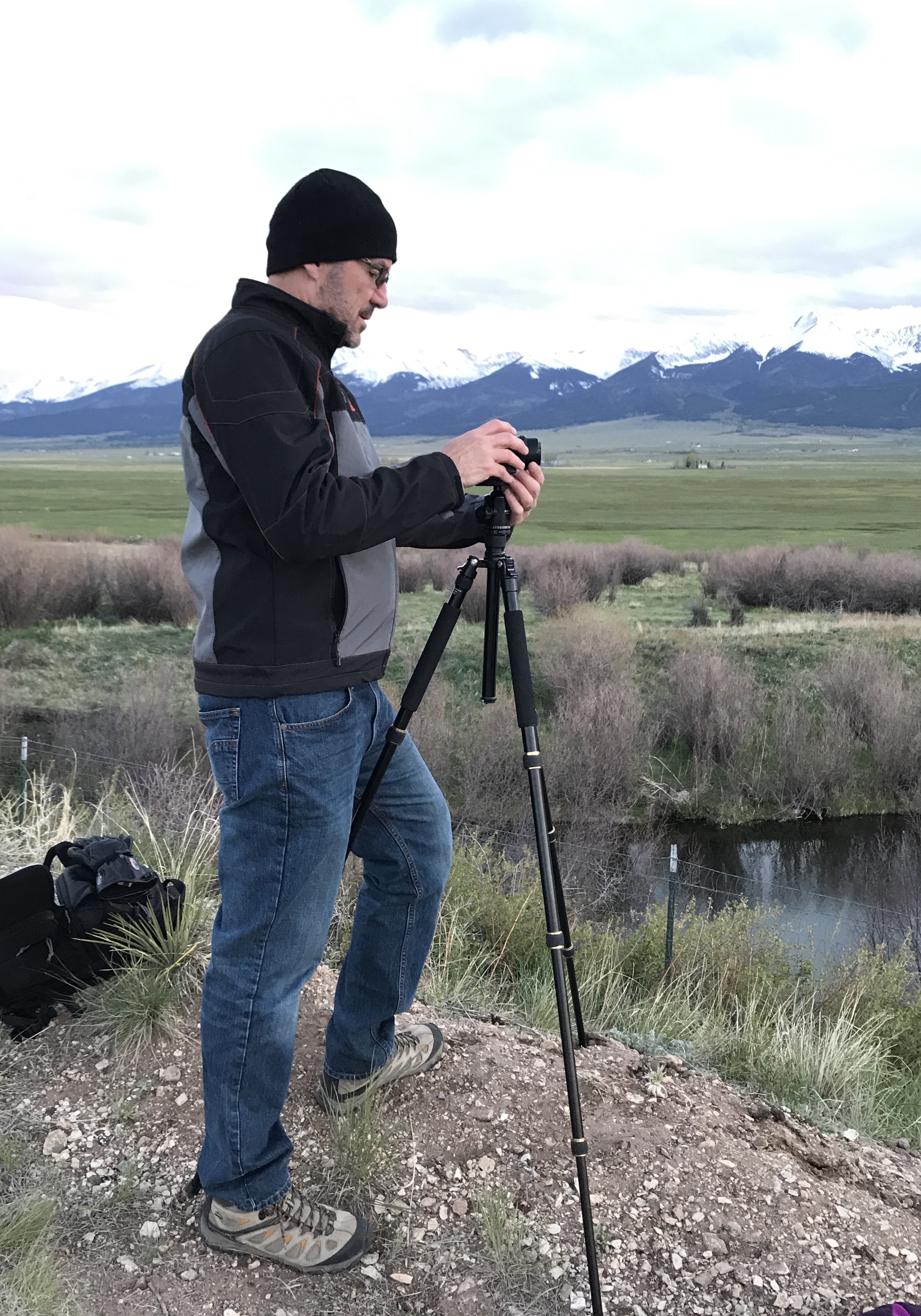
Finding Home in What Persists.

“Where are you from?”
It’s a simple question, one most of us have heard a hundred times. For me, it’s one of the hardest to answer.
There is no concrete answer, at least not in geographic terms. By the time I reached second grade, I had already lived in three states and one foreign country.
That’s the life of a Navy family. Later, the Marine Corps and a career in high tech kept the motion going.
By the time I was fifty, I had lived in more cities than I can easily count. Eight states. Three other countries. It feels a bit like a Johnny Cash song, “I’ve Been Everywhere.”
I have lived in Colorado for seventeen years now, in the same house for more than twelve. In recent years, whenever we visit someplace new, I catch myself trying it on. “I could live here,” I’ll say. I’m not sure whether that’s just a passing observation or a pull to do what I know best: move. What I do know is that it unsettles my wife, who has lived in only two places, the Bay Area and Colorado.
A life of movement has taught me to embrace change. I gravitate toward it more than most. It is probably what led me to push for this RV trip to Florida. There is something about it that feels familiar to me, and more than forty days on the road, I somehow feel more comfortable than I did the day we left.
Much of that comfort comes from adapting to our new living space, as I wrote about in my last post. But maybe there is more to it than that.
As I sit here in our RV, two thousand miles from home, reflecting on all of this, a question takes shape: What is the cost of that restlessness?
Where does a sense of home come from when your life has been defined by motion? Is it a house? A zip code? Or is it something less tangible, something carried rather than located?
I grew up in a small, mostly self-contained family: Mom, Dad, and my brother Mike.
Mike was already a teenager when I turned six. We lived in different worlds. By the time I was old enough to understand what it meant to have a brother, he was already leaning toward the door. We had little in common beyond proximity and genetics. I have often joked that my parents raised two only children.
It wasn’t until I was in the Marine Corps, around twenty-three, that I first saw him as more than a sibling. That relationship would grow for the next forty years. He wasn’t just a brother to me. He was a mentor, a tormentor at times, and the one person I could turn to no matter what happened. He knew me better than anyone, and despite my mistakes, he believed in me. That meant more than I ever told him. Much of who I am was shaped by him.
Today, my parents and my brother are gone. There is no house that holds my history, no city that feels undeniably mine. When I look back beyond my wife and children, I realize how much of that world now lives only inside me. Carrying it alone sometimes leaves a quiet emptiness that is hard to shake.
And yet, sitting here in Florida, I have come to see that I am not entirely alone in their absence.
Unlike my father, my mother came from a larger family of four children. Her closest sibling was her younger sister, Aunt Norma, who raised a large, blended family. Because of our moves, I knew them mostly through stories told by my parents and my older brother.
My cousins knew my parents and my brother in ways I did not. They carry stories, memories, and pieces of them that I never saw. They are, in their own right, a tightly woven family, bound not just by history but by affection.
In recent years, I have come to know Aunt Norma’s four oldest children, Jackie, Tom, Judy, and Patti, not just as cousins, but as family in a deeper sense. When I am with them, I am struck by the ease of their affection and respect for one another. They are distinct personalities, yet clearly part of something shared. They carry a continuity I only experienced with my brother as an adult, one that was cut far too short.
What moves me most is the connection they hold to my parents and to Mike. I hear stories of Uncle Jerry’s humor, of the love they had for Aunt Julie, and of the mischief shared with cousin Mike. With each story, I feel the presence of my mother, father, and brother in a way that still brings me to tears.
Through their love for one another and the stories they tell, I have come to know my Aunt Norma as the strong, courageous, and loving woman my mother loved so dearly. Through the way they have welcomed me into that love, I have come to understand a deeper sense of family than I had ever known. Family does not end with the passing of those who formed us. It continues in the bonds they created, in the stories that are still told, and in the affection that still moves freely between us.
In The Art of Living, Thich Nhat Hanh writes that those we love never truly disappear. They continue in us and in the hearts of those they have touched. I had appreciated that idea intellectually. Sitting with my cousins, I began to feel it.
In that realization, something that once felt lost now feels enduring. And in that, I have found a truer sense of home, whether it is made of bricks or rolls on wheels.

Comments