
What Broke
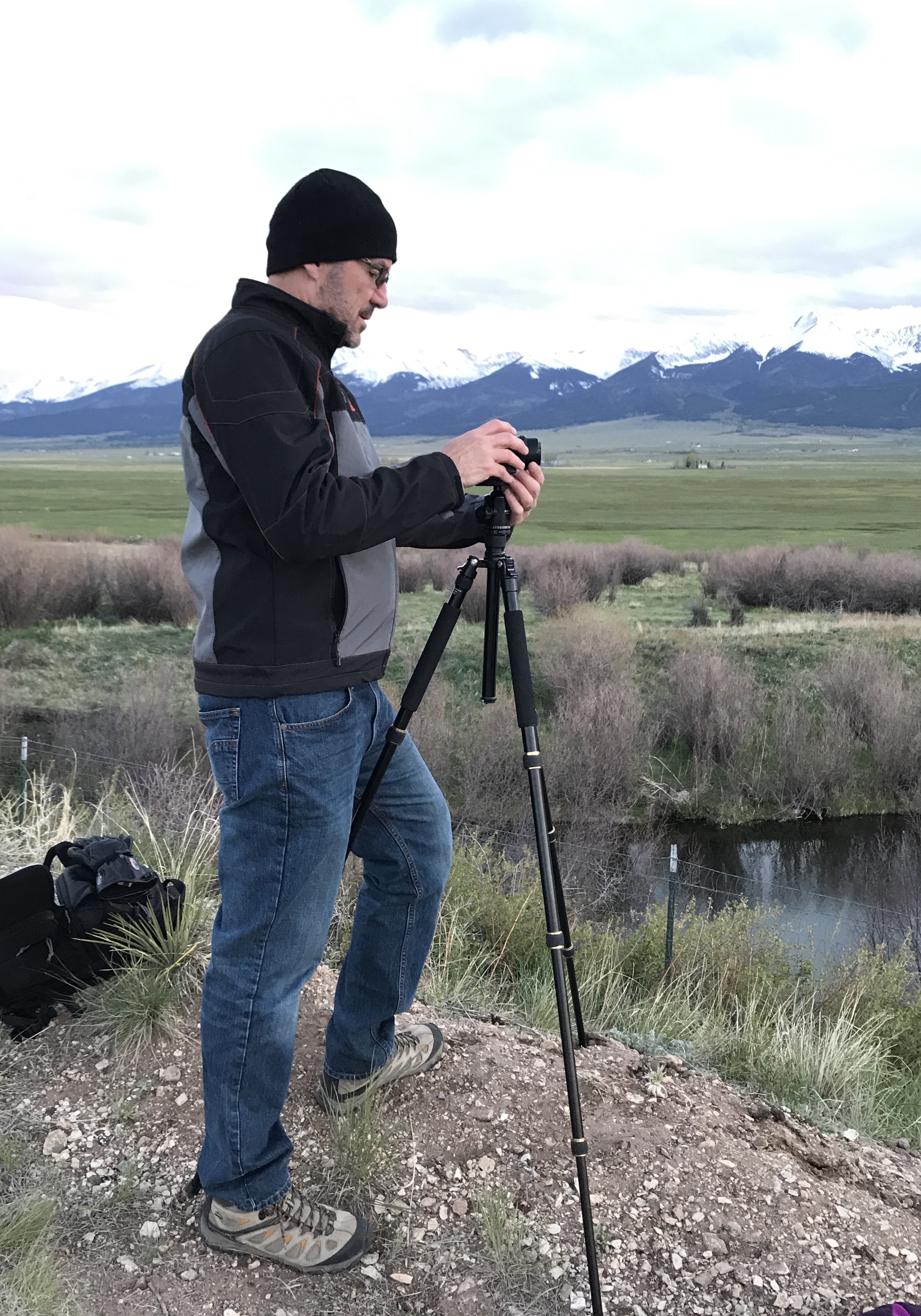

I love Colorado. I have since the first time I visited more than thirty years ago. I remember thinking, I’m going to come back here someday, and I did. After sixteen winters—five after I stopped skiing—it felt like time to try something different. Marilyn, who had spent even more winters there than I had, agreed.
So we loaded up the RV and headed to Florida.
Twenty-five hours of driving and four days later, we arrived in St. Augustine. I began this essay sitting inside the RV while the temperature outside hovered at twenty-eight degrees, colder than many winter mornings back home in Colorado.It has been a good adventure. A real one.
What has surprised me most is how quickly we habituate to the world we build around us. At home, I move from room to room without thinking. In my office, everything is tuned to me: a large monitor, a familiar layout, accessibility tools that make writing with visual impairment not just possible, but fluid. Effort fades into the background.

The RV is comfortable. It’s large for what it is, with plenty of space and even a small desk. I knew it wouldn’t be the same. What I underestimated was how much that difference would matter—and how quietly it would begin to erode my sense of control.
Our RV has an exterior spray hose you can use to rinse dirt off things—the dog, your shoes—before dragging it into the living space. It’s a small but genuinely useful amenity, when it works. Ours sprang a leak, thanks to a failed O-ring. An easy fix. The kind of thing I’ve repaired countless times over the years.
I took the broken O-ring to a nearby Ace Hardware. You know the wall of little drawers—springs, washers, gaskets—every hardware store seems to have one. With the help of an employee, we dug through them until we found a match. It fit perfectly. I paid, left the store, and felt competent.
It didn’t work.
Back in the RV, I turned to AI and learned that what I actually needed was an AS-006 EPDM O-ring, 5/16" ID × 1/16" cross-section, NSF potable-water safe. Armed with that information, we drove to a different Ace Hardware. An employee confirmed the size, nodded thoughtfully, and told us they were out of stock.
Next stop: Lowe’s. Row after row of O-rings, each labeled with part numbers and specifications printed in what appeared to be six-point font. So my wife started reading them for me.
“Here’s a five-sixteenths,” she said.
“What’s the inside diameter?” I asked.
“What’s that?”
Ten minutes later, we left empty-handed again.
Camping World, I thought, has to have one of these. Worst case, I’d buy an entirely new spray hose. We left with neither—and with me briefly wondering whether the most efficient solution might be to buy a new RV.
Amazon, then. Surely this is what Amazon is for. But it took only a moment to realize their recommendation engine wouldn’t let me search for what I needed. It insisted on showing me what it thought I wanted instead.
Somewhere between the third hardware store and my explaining the difference between ID and OD, it occurred to me that this wasn’t really about an O-ring anymore.
Traveling in an RV is always an adventure. Sometimes more than I signed up for. At times it feels less like travel and more like a rolling home-improvement project. Each time we reach a destination and open the door, I start scanning for what shook loose along the way. A window valance. A speaker. The light over the kitchen sink. There’s always something. Take a house, put it on four wheels, and pound it down the highway for several hours—something is going to break.
We bought our first RV after I knew I was losing my central vision, but before I had to give up driving, and before so many other quiet losses began to stack up. Back then, when something broke, I fixed it. Things have changed in the years since. I can’t pick out the bag of coffee I want in a grocery store, let alone an O-ring. I still bring my tool bag on every trip, but these days it serves more as ballast than utility.
The same pattern showed up when I tried to get my old laptop working so I could leave the large desktop I rely on at home. In theory, it should have been simple. In practice, it wasn’t.
I keep running into the same wall. Losing the ability to do things you once did without thinking is frustrating, but it’s something I’ve learned to live with over the past several years. What I’m only now beginning to understand is that the harder loss isn’t ability—it’s agency. And that’s proving much more difficult to accept.
By agency, I don’t mean independence or self-reliance in the heroic sense. I mean something simpler: the ability to carry out the ordinary things in your daily life that matter to you.
For me, agency is one of the quiet foundations of dignity. When it erodes, what follows isn’t dramatic grief. It’s subtler than that. Not the searing pain of losing a loved one, but something more like a low-grade fever—always there, easy to ignore at first, but slowly draining your energy and leaving you feeling just a little less than yourself.
For most of my life, I thought little about agency. It was invisible to me because it wasn’t missing. It’s far harder to notice its presence than its absence.
Now, even when I know exactly what I need—an O-ring, a setting, a file—I can’t always act on that knowledge myself. The thinking is still there. The intention is still there. But somewhere between deciding and doing, the process breaks down. I find myself dependent on things beyond my control to carry out even the simplest tasks on some days.
In the aftermath of the O-ring debacle, I ran headlong into another version of the same problem while wrestling with technical issues on my computer. Things I can usually address easily at home, on a large screen, became stubborn and opaque on my aging laptop. Hours later, I found myself snapping at my wife for no real reason. Sensing that something deeper was going on, she responded with compassion rather than the outrage that might have been justified. It helped me unwind, but it wasn’t until the next morning, while writing in my journal, that I understood what was really happening. I was reacting to the accumulated loss of agency.
At home, I can move through life with relative ease. I know what I can do and what I can’t. I know where things are. And if all else fails, I know where I can retreat for a few moments to reset. In the RV, I have none of that. I was caught off guard by how quickly—and quietly—the loss of agency crept in, without ever announcing itself.
I don’t know that there’s an easy fix for this, or even that there should be one. What I’m learning is how quickly agency can slip away when the environment changes—and how much of my sense of dignity goes with it. Paying attention to that may be the only real response I have right now.
Somewhere between the broken O-ring and the road unfolding ahead of us, I found a lesson that had little to do with what I could or could not fix on my own. I was reminded of the importance of listening for the quiet whisper beneath the anger, the one that reveals what’s really in my heart before emotion takes over.


Just spent 6 weeks on the road in the Southwest and am very familiar with the repair-as-you-go type of travel. Hope you are happy these days.